ARCHITECTURE
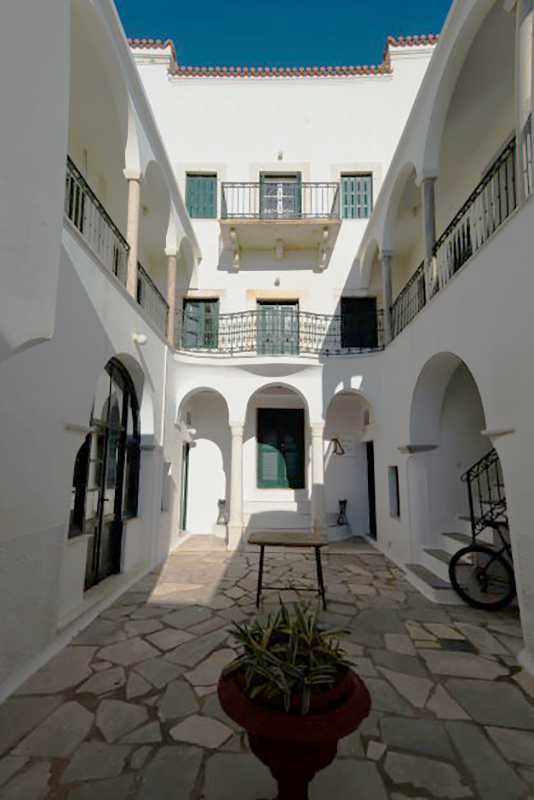
The architecture of Tinos is a living palimpsest, blending vernacular and urban elements, shaped by the needs of its inhabitants from antiquity to the present. It is based on the use of local materials such as stone, marble, and fida (oak), harmonizing with the natural landscape and adapting to the bioclimatic conditions of the island.
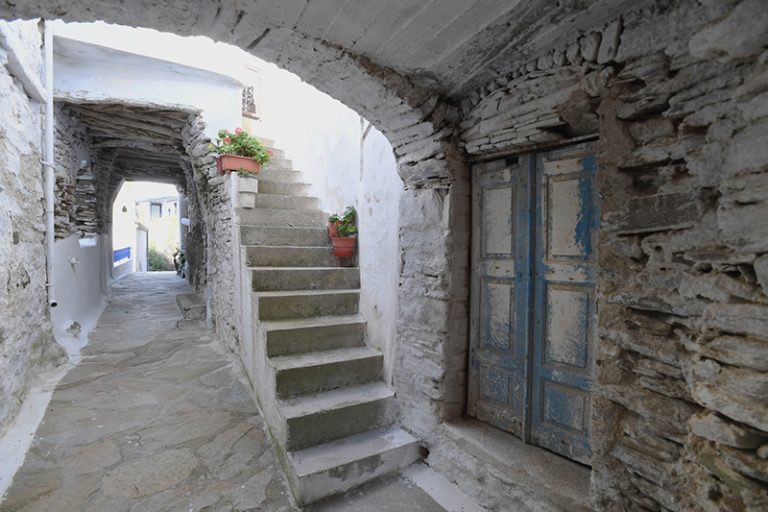
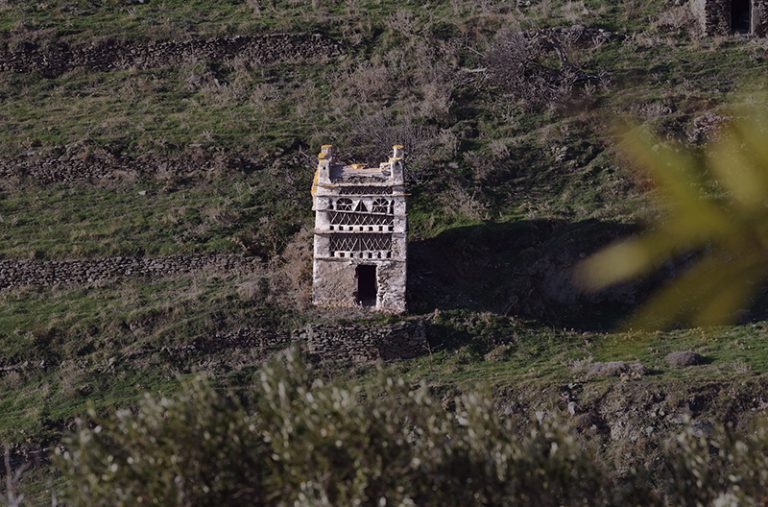
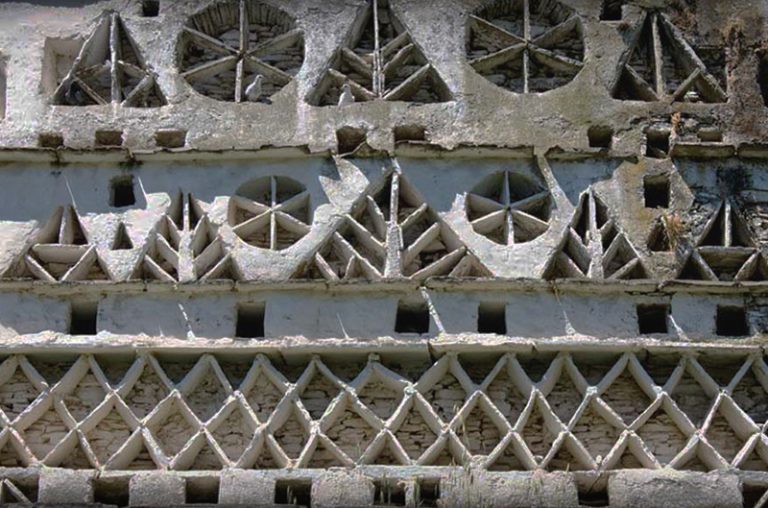
The traditional settlements of Tinos are characterized by cobbled alleys, arches, and ornate lintels, while pre-industrial structures such as the iconic dovecotes, watermills, windmills, and threshing floors serve as emblematic examples of local architecture. The island’s long tradition of marble craftsmanship is evident in fountains, mansions, and churches, particularly in the Exo Meria region.
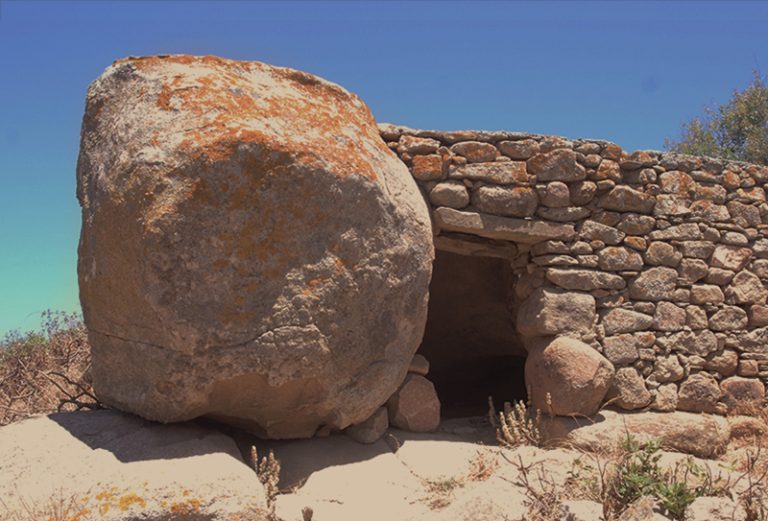
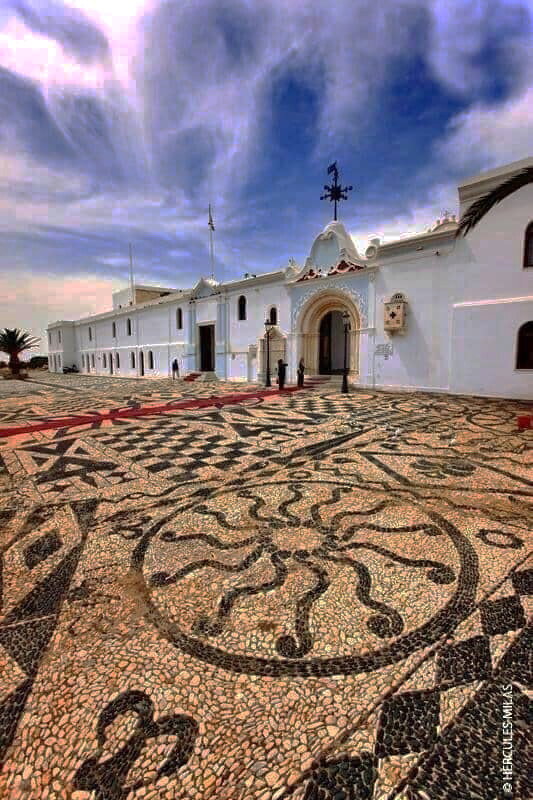
Housing in Tinos has been shaped by geographical and climatic conditions. The typical Tinian house is designed to withstand strong winds, while distinctive features include marble skylights, historically linked to silkworm farming, and pebble-paved courtyards, found in both churches and mansions. Dry-stone walls, the stone terraces that shape the rural landscape, are among the most characteristic images of the island.
Despite the increase in modern construction, Tinos remains a living architectural treasure, where the past meets the present, offering visitors a unique aesthetic and cultural experience.